Alpha Testnet Release
During the alpha release, Polybase is running all the indexers (validators) on
the network so we can ensure development velocity and network protection during
this early phase of the project. Therefore, all connections must be proxied by
our testnet.polybase.xyz gateway.
Our next major release will open the network for anyone to be an indexer at
which point the gateway won’t be necessary and the client will connect directly
to the p2p network. We will continue to operate the gateway for as long as it is
useful to our community.
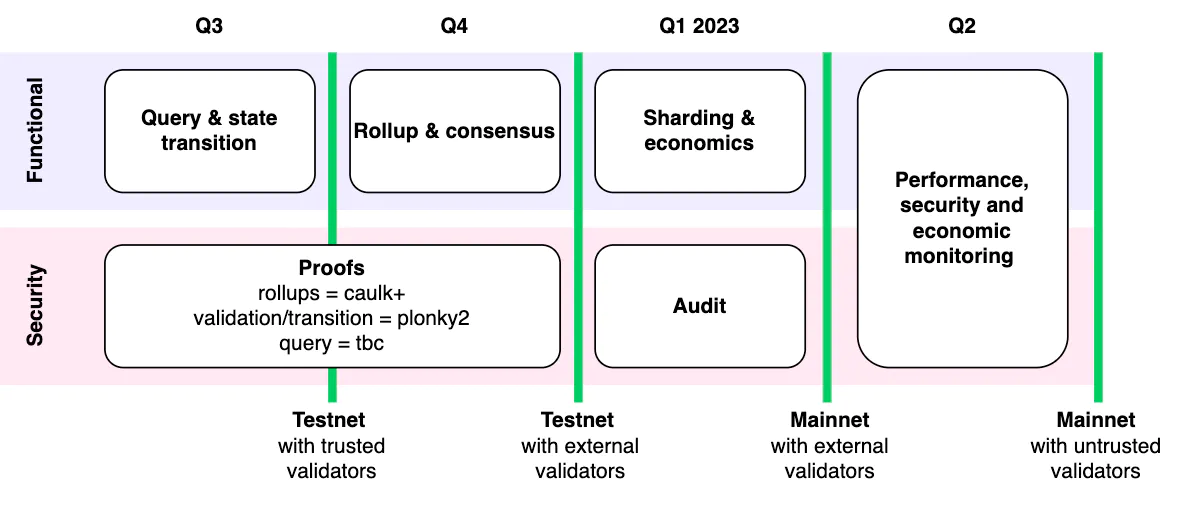
What is your roadmap?
Polybase is committed to moving to a fully decentralized network as soon as
possible. We have an ambitious roadmap for completing mainnet readiness.
What is the Polybase architecture?
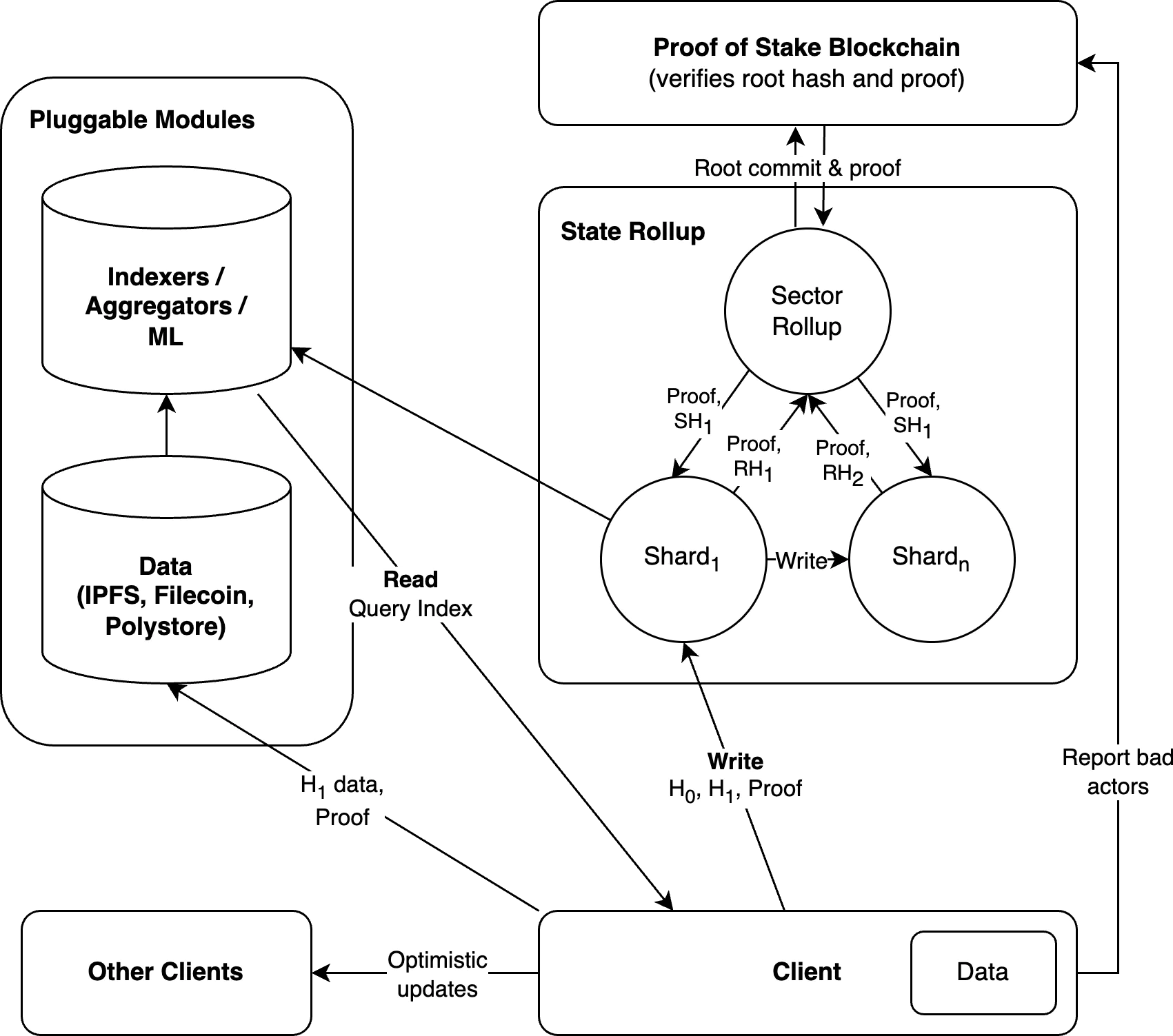
Polybase is a state zk-rollup protocol, with native support for pluggable data
storage and indexing. While this architecture may look complex, our SDK handles
all of the components you need out of the box, with a Firebase-like API.
The whitepaper has much more information about our architecture:
https://polybase.xyz/whitepaper
Where is the data on Polybase stored?
During Alpha Polybase runs all the nodes that store your data, but pluggable storage will be available soon.
- Local storage / custodial - you can store the data on the users device,
most useful for highly private data and self-custodian use cases
- Decentralized storage protocol - such as filecoin, ipfs, arweave, etc
- Centralized storage - such as AWS S3, Postgres, Google BigTable, etc (if
you use a centralized store, your data will be at risk of government
censorship)
Out of the box, the default SDK implementation uses the Polybase datastore,
which is a decentralized datastore with similar functionality to Firebase
Firestore.
If data is stored off-chain, isn’t Polybase centralized?
Actually, no.
Our core innovation is storing data off-chain but validating it on chain with
merkle tree root hashes and zk proofs. This allows you to inherit the security
of a blockchain but the cost/scalability of a web2 database.
The whitepaper has much more information
about the methodology.
Can everyone see my data on Polybase?
During Alpha Polybase runs all the nodes that store your data, and data will be publicly visible.
- Local storage / custodial - no one else can see the data, only the user
- Decentralized storage protocol - the data is public, but you can encrypt
the data to ensure only valid users can decrypt and read it
- Centralized storage - you can implement your own access controls
In all cases, data can be encrypted to ensure the best privacy protection.
The Polybase SDKs provide the functionality to encrypt the data with a wallet.
This could be a user’s Metamask wallet or a custodial wallet for the dApp.
Does every write / update transaction need to be signed?
Currently, yes every transaction needs to be signed (usually by the users’s wallet if implemented in a non-custodial way). There’s a way to create a “session key” which would be a symmetric key that is encrypted using the user’s wallet. We’re planning on adding utilities to the SDK to make creating a session key easier.
How do write permissions work on Polybase?
Writes to a Polybase collection are performed by calling a function defined on the schema of your collection. All updates must happen via these collection functions, there is no general .set() function.
There are two ways to define who can call these functions (and therefore update and create records in your collection). The following examples are two ways to do the same thing.
@call + code
You can allow anyone to call the function and handle the permissioning logic inside the function itself using code, for example:
@public   // could also be written as @read @call
collection User {
  id: PublicKey;
  name: string;

  // Anyone can call constructor
  constructor (name: string) {
    this.id = ctx.publicKey;
    this.name = name;
  }

  // Anyone can call setName (you
  setName(name: string) {
    // Checking permissions with code
    if (this.id != ctx.publicKey) {
      error("Denied, not allowed");
    }
    this.name = name;
  }
}
@call(<field_name>)
You can add @call(<field>) directive which means that only specified actors can call the function, the field should either be a PublicKey type, or another collection (if you want to use delegate rules).
@read
collection User {
  id: PublicKey;
  name: string;

  // Anyone can call constructor
  constructor (name: string) {
    this.id = ctx.publicKey;
    this.name = name;
  }

  // Only user with public key can setName
  @call(id)
  setName(name: string) {
    this.name = name;
  }
}
How do read permissions work on Polybase?
There are two ways to define read permissions in Polybase. You can either:
-
Encrypt the data using our encryption utilities - this allows you to control who can read data by sharing a secret key with them.
-
Add permission/authorization rules - you can define rules on your schema using the
@read and @delegate directives. This allows you to control who can query records.
How can the data on Polybase be accessed without going through the Polybase gateway?
While we are in testnet alpha, the only way to access the Polybase network is through
the gateway. Once we open the network to our community, anyone may run the
Polybase indexer reference implementation and directly connect to the P2P
network (or use the SDK).
How can I verify Polybase is decentralized?
While we are in testnet alpha, there is no way to verify the decentralisation of the
network. However, we are running the nodes behind the gateway in a way that will
enable decentralisation as soon as we allow other participants to join the
network.
Who pays for Polybase?
In most cases, at least initially, we expect it will be the developer who
creates a collection who will ensure the database usage is paid for. In the
future, we imagine that other protocols themselves will create mechanisms to pay
Polybase directly. For example, a social network application may generate
revenue (by running ads, charging a subscription, token appreciation, etc), and
that protocol will have a mechanism to ensure that the balance on the Polybase
protocol is always positive.
What happens if the developer stops paying?
Anyone who benefits from the data being maintained can choose to continue paying
for the service. It’s similar to how ENS domains allow anyone to pay the
registration fee even if the domain belongs to someone else.
There will also be an option to stake Polybase’s native token and use that to
pay for database usage.
How much does Polybase cost?
In testnet Polybase is free to use. For mainnet, we will charge developers to
create collections and store data. You can expect the costs to be similar to
Firebase Firestore.
How does Polybase make money?
When we reach mainnet, we will launch a utility token that will be used for
payment and that token will accrue value as demand for the network grows,
rewarding the early participants of the protocol.
How do you prevent spam attacks?
Invalid and spam transactions get rejected by the network before being processed
because the zk proof is checked. Checking zk proofs is a fast/cheap operation,
therefore no cost would be incurred for those.
What happens if Polybase (the company) shuts down?
Once we hit mainnet and full decentralization (scheduled for mid-2023), the
network will continue to operate without our oversight. This is why creating a
good cryptoeconomic system that incentives continued usage of the network is
extremely important.
In fact, we intend to close down the company and replace it with a DAO
(decentralized autonomous organisation) that will be responsible for the ongoing
stewardship of the protocol.
Why do you have your own eth library?
We have our own eth library so that we can expose only the functions needed for
our use case. The web3 and eth javascript libraries contain code for a lot of
different use cases which increases the build size and makes it harder for users
to work out which functions they should use.
What information is included in the per-block rollup posted to blockchains?
We rollup the current state of the whole Polybase root database at each block.
What are the security (or more so validation) benefits?
We use zk-proofs, which are generated on the client using the old hash, which
creates a new hash and the proof that the new hash is valid - that is submitted
to the rollup, which gets rolled up to the root hash.
This means the user does not even need to share the underlying data with the
network, as the proof ensures the collection validation rules are followed.
The network only sees the hash of the old record, the hash of the new record,
and the proof.
As everything is validated with proofs, you can prove any current (or existing
state), making is very easy to create bridges to other blockchains (i.e. you can
use Polybase data in your Ethereum smart contracts, etc)